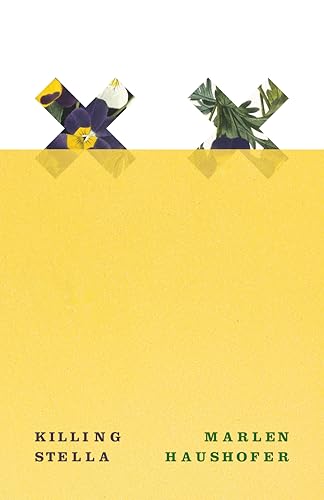
Left alone for the weekend while her husband and two children are visiting her in-laws, the narrator of Killing Stella recounts the addition of her friend’s daughter, Stella, into their already tense and tumultuous household. Staring out the window at her garden, she worries about the baby bird in the linden tree, about her husband, Richard, who flits from one adulterous affair to an other, about her son’s gloomy demeanor and her daughter’s obliviousness to everything, and, most of all, she worries about Stella, a confused teenager who has just met a sudden and disastrous end.
A domestic horror story that builds to an apocalyptic ending, Killing Stella distills many of the themes of Marlen Haushofer’s acclaimed novel The Wall into a claustrophobic, gothic, shattering novella.
I don’t think I’ve got the chops to take this book apart because I didn’t really enjoy it. It was meandering and unfocused at times and I… just found I was reading and doing sunk cost. It’s a really light novella, so I did it, I finished it.
It’s more like… the horror of staying in one place. Our main character is like an anchor, changing for the worse over time and sitting with the knowledge of change and motion around her while deciding, actively, to pretend ignorance.
And the story happening in front of her is a result of when she did make motion, that is, sort of “strike out” against someone she disliked (Stella’s mother) by being kind to Stella herself. Just the small act of getting her nicer clothes snowballed into the MC’s husband developing an interest in this teenager (I think they said 19, but still) and seducing her, which made the MC’s son take pity on his mother and grow up slightly with the weight of such a secret on him and behave with coldness towards Stella, and then when MC’s husband pumped and dumped Stella, she sinks into sadness where no one really helps her and ultimately gets into an “accident” that is heavily implied to be purposeful suicide.
That’s the short of it. It’s quite a dreary book, not one I would call horror so much (it’s classified as horror, so I suppose it must be, but a realistic sort of human horror) as a psychological withering.