
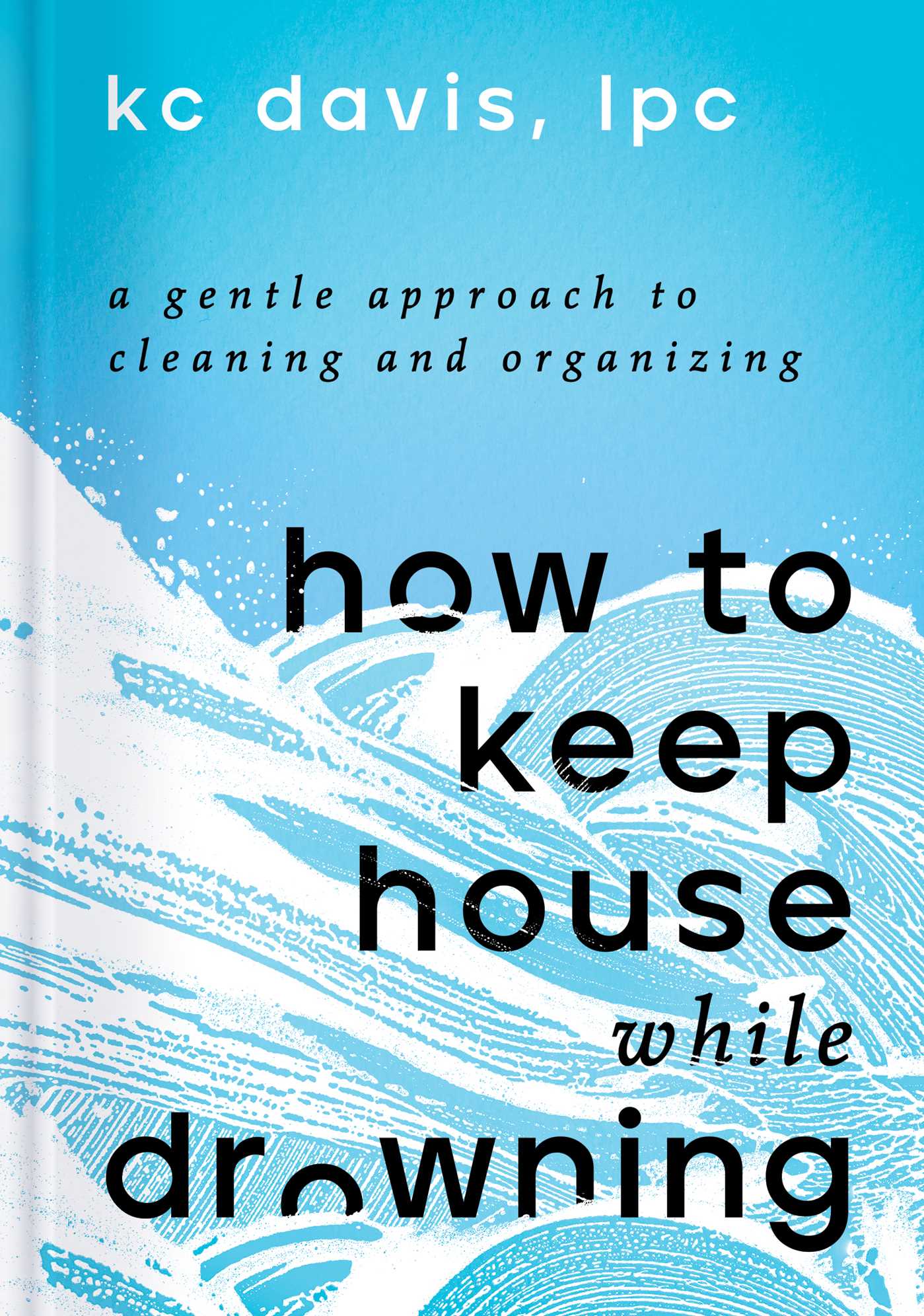
This revolutionary approach to cleaning and organizing helps free you from feeling ashamed or overwhelmed by a messy home.
If you’re struggling to stay on top of your to-do list, you probably have a good reason: anxiety, fatigue, depression, ADHD, or lack of support. For therapist KC Davis, the birth of her second child triggered a stress-mess cycle. The more behind she felt, the less motivated she was to start. She didn’t fold a single piece of laundry for seven months. One life-changing realization restored her sanity—and the functionality of her home: You don’t work for your home; your home works for you.
In other words, messiness is not a moral failing. A new sense of calm washed over her as she let go of the shame-based messaging that interpreted a pile of dirty laundry as “I can never keep up” and a chaotic kitchen as “I’m a bad mother.” Instead, she looked at unwashed clothes and thought, “I am alive,” and at stacks of dishes and thought, “I cooked my family dinner three nights in a row.”
Building on this foundation of self-compassion, KC devised the powerful practical approach that has exploded in popularity through her TikTok account, @domesticblisters. The secret is to simplify your to-do list and to find creative workarounds that accommodate your limited time and energy. In this book, you’ll learn exactly how to customize your cleaning strategy and rebuild your relationship with your home, including:
-How to see chores as kindnesses to your future self, not as a reflection of your worth
-How to start by setting priorities
-How to stagger tasks so you won’t procrastinate
-How to clean in quick bursts within your existing daily routine
-How to use creative shortcuts to transform a room from messy to functional
With KC’s help, your home will feel like a sanctuary again. It will become a place to rest, even when things aren’t finished. You will move with ease, and peace and calm will edge out guilt, self-criticism, and endless checklists. They have no place here.
this was my first book of the new year. i decided to try a few things while reading it to help myself pay more attention and, surprisingly, it worked. i may be on to something.
basically… i moved my body while reading. little basic exercises or walking. i didn’t have to, but when i got drowsy i did and it was like everything slid back into focus. it felt good, and this book was the perfect one to try this with.
see, it’s written for neurodivergent folks. there’s two ways to read: the full book, or the shortcut route the author put in that contains the most relevant chapters and takes perhaps 30 min-hour to read. the full book is about two hours, max, depending on how fast you read, with short of 150 pages.
and i think i may pick this one up for myself. it would merit repeated readings because this isn’t something you could learn in a day, but it’s a lot of excellent thoughts and pointers. it’s gentle and puts things in perspective, most of all:
care tasks are morally neutral.
there’s no good or bad tied to taking care of yourself or the house or anything like that. there’s functional and there’s not. there’s no rules to cleaning: do what works, and the world won’t fall apart. the world will be fine even if you decide to take the easy route.
it makes me feel better about how i do things and how i will be doing things in the future. it makes me feel better about the progress i may or may not make when i need rest. it makes me better about paying attention to my own needs, and makes the guilt of past needs ease. i used to struggle a lot with basic functions and my depression was so bad i could barely muster the energy to lift my arms. it felt like i was human sludge. and the book shows that it is a shared experience, and the guilt i have over needing help… doesn’t need to guilt me, because i needed help and i got help and i tried to do what i could with what i had.
i still will have guilt for some time, but the book encourages me to reassure myself that rest is good and i can, and should, work with my body, not against it.